

Who Killed Hannibal


Açıklama
Kullanım Durumları
- ✓ Caption usage suggestion: "Me after eating a whole pizza: 'Why do I feel sick?'"
- ✓ Posting usage suggestion: Ideal for posts about obvious consequences, self-sabotage, or satirical commentary on denial.
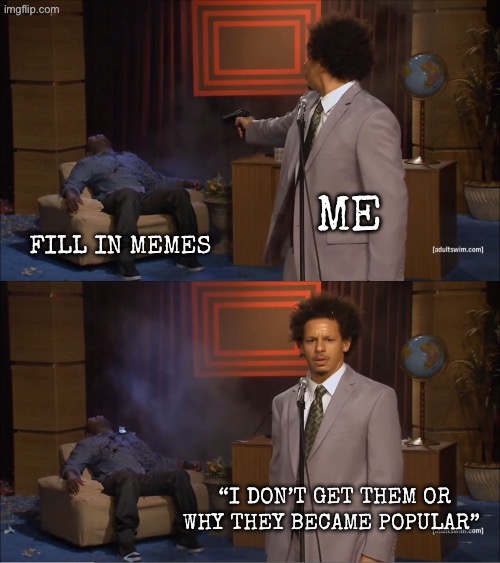
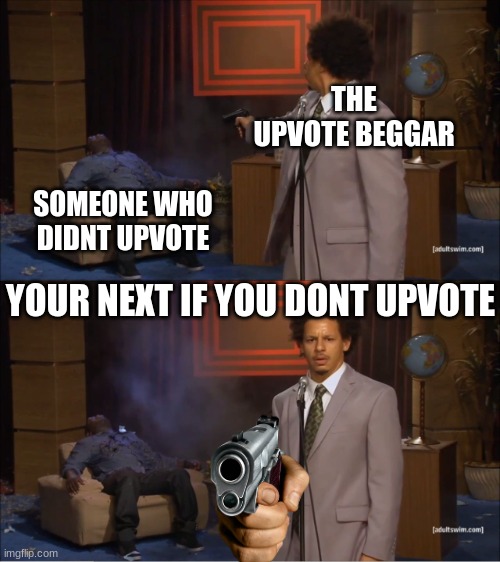
- ✓ Editing usage suggestion: Clearly label the "shooter" and the "victim" with the relevant elements of your scenario.
- ✓ Audience-fit suggestion: Appeals to those who appreciate dark humor, absurdism, and critical commentary on illogical behavior.
Sık Sorulan Sorular
Bu Meme Hakkında
The "Who Killed Hannibal" meme, originating from a chaotic scene on The Eric Andre Show where Eric Andre shoots Hannibal Buress, is a perfect template for illustrating a dramatic, often unexpected, and self-inflicted consequence or a moment of profound, often bewildering, realization of causality. It's used to depict situations where someone (or something) is clearly responsible for a negative outcome, yet expresses confusion or denial. This template is ideal for conveying ironic blame, self-sabotage, or the absurdity of questioning obvious facts. Its emotional use case ranges from genuine shock to darkly humorous commentary on illogical reactions. This meme has become a staple in digital communication because of its versatility and relatability, effectively capturing moments of dramatic, often self-aware, chaos. Creators often compare it with American Chopper Argument when depicting a dramatic, often illogical, confrontation, or with The Scroll Of Truth for moments of dramatic, often unwelcome, revelation of truth. The format's strength lies in how it adapts to different scenarios, much like how Trump Bill Signing has evolved to meet modern content creation needs by illustrating official statements that may be met with denial. Whether you're crafting a witty reply or building a narrative arc in your content, understanding how this template compares to Don't You Squidward can significantly enhance your creative output, as both involve a moment of impactful, often surprising, interaction, though Hannibal's is more about direct, chaotic consequence. The template's enduring popularity stems from its ability to capture complex emotions in a simple, shareable format that resonates across different platforms and audiences.
İlgili memeler


Popüler Memler


